Creative Solutions to Increase Global Access to Drinking Water
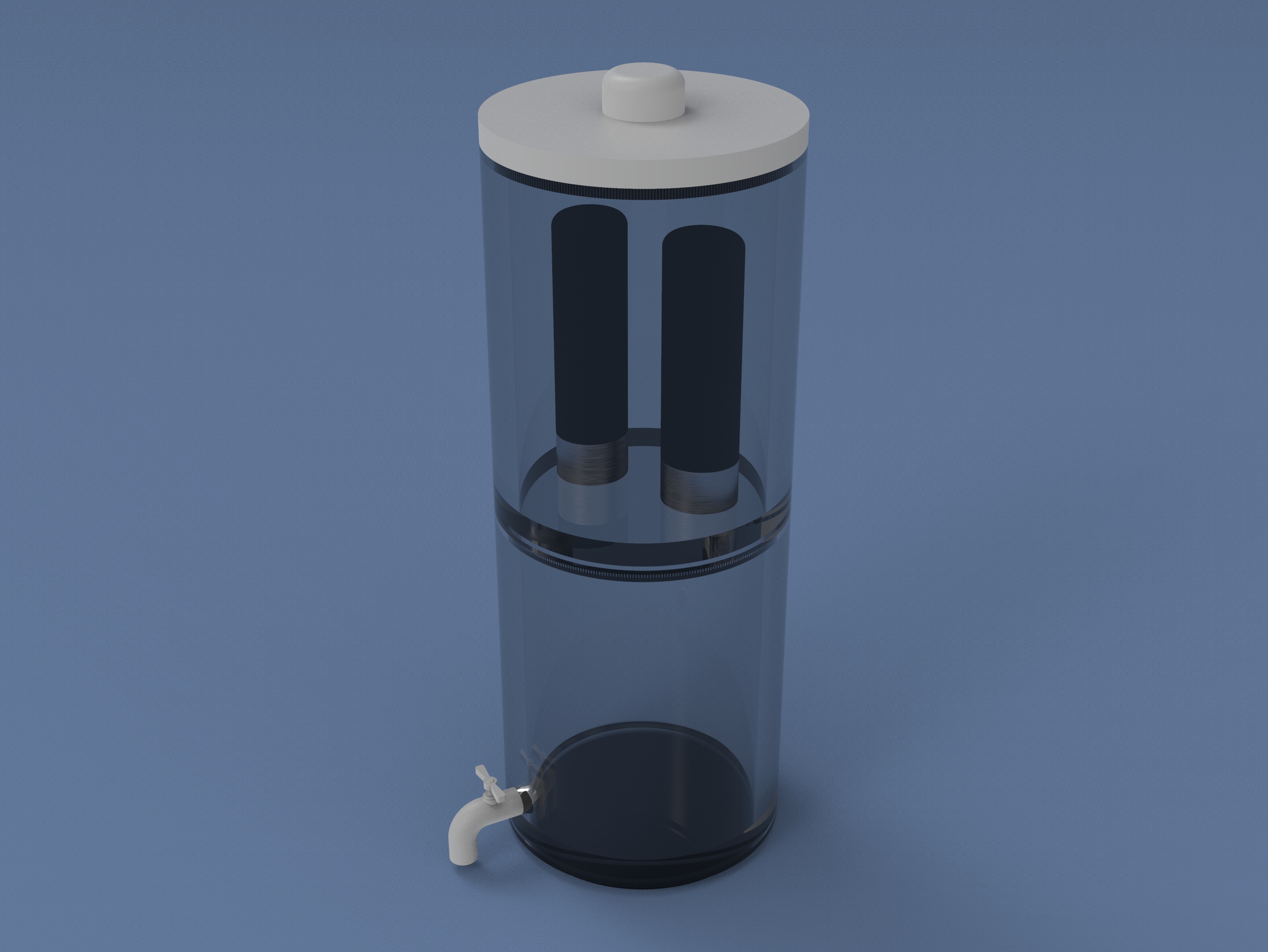
3D model of the sustainable water purification system
Problem Statement
Access to clean drinking water remains a significant issue, especially in regions affected by natural disasters and poor infrastructure. The challenge was to develop a durable, portable water purification system that effectively eliminates pathogens without relying on electricity.
Source: Google Images
My Role
Lead Researcher
- Conducted in-depth technical research on purification methods
- Analyzed ceramic filtration, solar, and chlorine disinfection techniques
- Evaluated feasibility for implementation in resource-constrained environments
3D Concept Model Designer
- Created the structural model using Ansys SpaceClaim
- Emphasized functionality, sustainability, and user-centered design
- Designed for durability and ease of use in various environments
Tools & Skills Used
Software & Tools
- Ansys SpaceClaim - 3D modeling
- Canva - Presentation design
Skills Applied
- Product research
- CAD modeling
- Team collaboration
- Problem-solving
- Sustainable design
- Concept validation
Design & Engineering Process
1. Research Phase
Explored technical feasibility and sustainability of various disinfection techniques, with emphasis on methods applicable in low-resource settings.
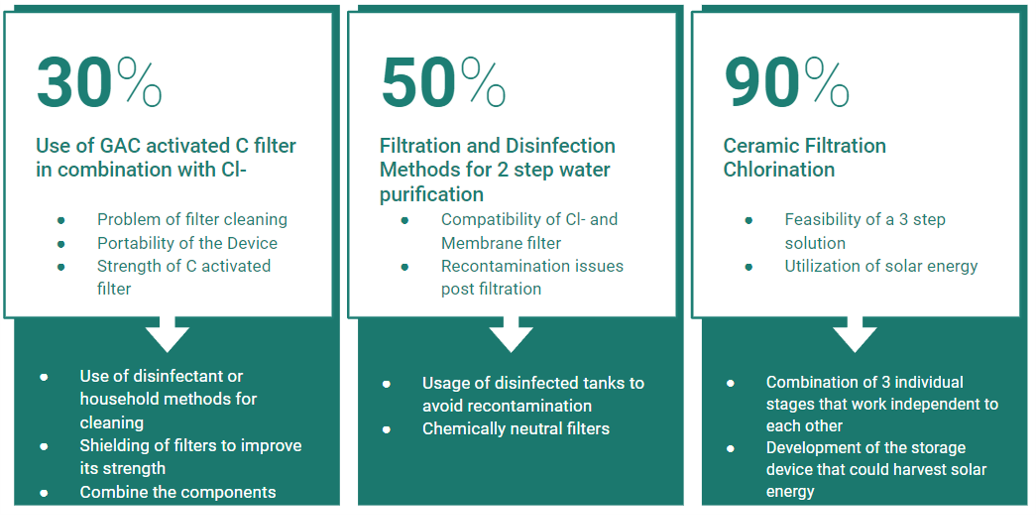
Comparing different water purification technologies
2. Brainstorming & Analysis
Used force field analysis to systematically evaluate the advantages and limitations of different purification technologies, considering factors like cost, durability, effectiveness, and cultural acceptance.
3. System Integration
After thorough analysis, we decided to combine three proven methods for maximum effectiveness:
Ceramic Filtration
Removes particles, bacteria, and protozoa through physical filtration
Solar UV Disinfection
Uses natural sunlight to inactivate microorganisms
Chlorination
Provides residual protection against recontamination
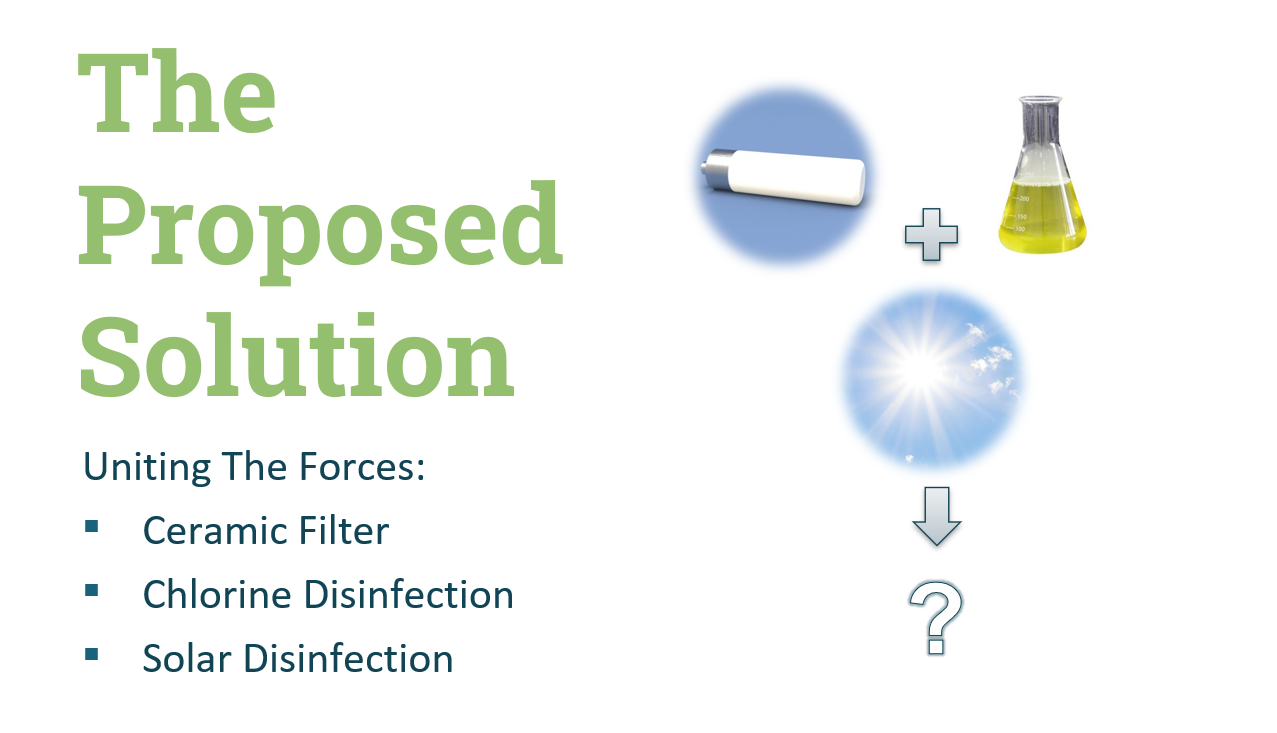
Integration of three purification methods in a single system
4. Material Selection
Selected materials based on sustainability, durability, and local availability:
- Ceramic Filters: Reusable and locally producible, reducing long-term costs
- PMMA (Polymethyl Methacrylate): Durable, UV-stable, and recyclable material for the main container
5. Prototype Modeling
Designed a stackable, transparent 20L cylindrical container with specific features:
- Dual ceramic filters to ensure sufficient flow rate
- Transparent body to enable solar UV disinfection
- Easy tap access for convenient water dispensing
- Compartment for optional chlorine tablets
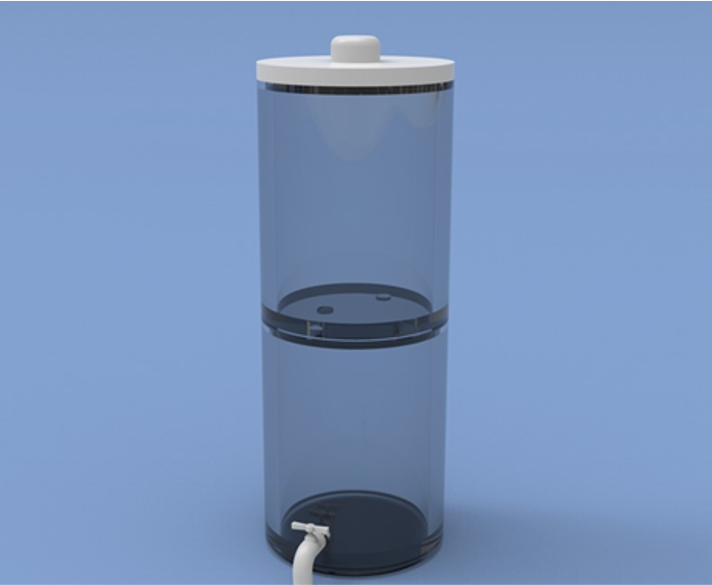
3D model of the final water purification system design
Results & Outcome
Final Concept
A sustainable, low-cost, electricity-free water purification device capable of neutralizing both biological contaminants and viruses.
Impact
Designed specifically for vulnerable communities in Asia and Africa, offering flexibility for various climates and water sources.
Scalability
Focused on localized production and community ownership to enhance adoption and long-term sustainability.
The final water purification system concept